
kategorie
nowy blog
How to Customize Paper Canisters for Food, Snacks and Powder Packaging
November 20 , 2026Paper canisters are a practical packaging option for brands that need to protect dry food products while creating a distinctive retail appearance. From snacks and tea to seasoning blends and powdered ingredients, a customized paper canister can combine a paper-based outer structure with a suitable inner lining and closure system to meet different packaging requirements.
However, customizing a paper canister for food packaging involves more than choosing a diameter and printing a logo. The contents, moisture sensitivity, oil content, dispensing method, storage conditions, and expected shelf life all influence the final packaging design.
For food brands, snack manufacturers, and powder product suppliers, the key is to match the paper tube structure, food-contact lining, lid, and printing finish to the product being packed. This guide explains how to customize paper canisters for different food applications and what to consider before placing an order with a packaging manufacturer.
A paper canister is a cylindrical packaging container generally made from paperboard or kraft paper. Depending on the intended application, it can include a single-layer paper structure or a composite construction with an inner lining, sealed bottom, and different lid options.
For food packaging, the inner structure is especially important. A paper outer layer provides space for branding and product information, while an appropriate inner lining can help create a barrier against moisture, grease, or other external factors. The selected lid and sealing method also affect how well the package protects its contents during storage and distribution.
SengKen offers several types of custom cylinder paper tube packaging, including rolled edge paper tubes, composite paper cans, food-grade paper canisters, sealed paper cans, and shaker-style paper tubes.
These structures can be customized according to product dimensions, material requirements, printing artwork, and packaging functionality. The right option depends on what the container needs to hold and how consumers will open and use it.
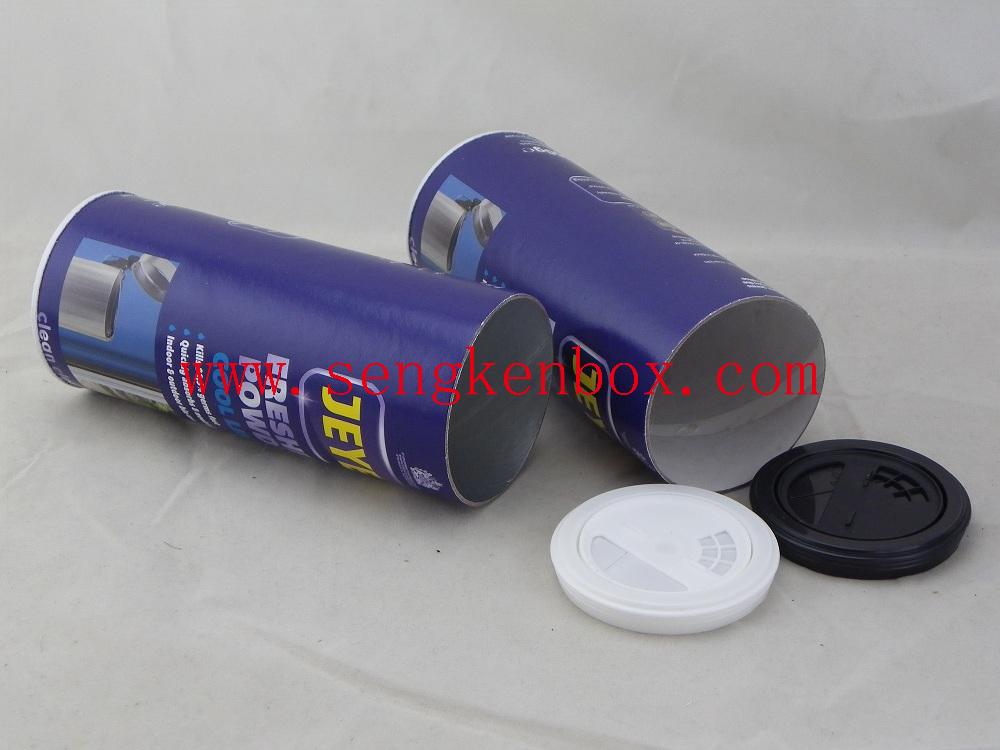
Paper canisters are suitable for many dry food applications, but the material and closure should be selected according to the physical properties of the contents. A package designed for loose tea, for example, may have different requirements from one used for seasoning powder or oily snacks.
Snacks and dried food: Paper cans can be used for products such as freeze-dried snacks, crispy foods, nuts, and other dry snack items. For products that are sensitive to moisture or contain some oil, an appropriate composite inner layer should be considered. SengKen's published product range includes composite paper cans designed for pork floss and fish floss packaging, using multi-layer food kraft paper with an inner aluminum foil liner.
Tea and coffee: Tea leaves and coffee products need packaging that helps protect their aroma and reduce exposure to moisture. Depending on the product, a composite paper canister with an aluminum foil liner and a suitable sealed lid may be considered. SengKen also lists paper canisters for tea and coffee-related packaging applications.
Seasonings and spices: Salt, pepper, seasoning blends, and granular condiments are often used in small quantities, so convenient dispensing is an important consideration. A shaker lid can make it easier for consumers to control the amount released without removing the entire lid.
Powdered food products: Matcha powder, milk powder, nutritional powders, and other dry powdered products may require a more carefully selected inner barrier and sealing structure. SengKen's published product range includes a matcha powder paper can with a kraft paper and aluminum foil composite structure, an easy-pull lid, and an outer PP cover.
For brands exploring different paper canister structures, the good airtight paper canister range is a relevant starting point for evaluating packaging options that prioritize sealing and product protection.
The structure of a custom food paper canister determines how the package performs during filling, storage, transportation, and everyday use. A suitable design should consider both the outer paper body and the materials used on the inside.
Paper body: Kraft paper, white cardboard, specialty paper, and composite paper materials can be used for different canister designs. Kraft paper provides a natural packaging appearance, while printed outer paper offers more flexibility for branded designs and product information.
Aluminum foil lining: An aluminum foil composite liner is an option for products that require additional protection from moisture, air, or light. It is particularly relevant for certain dry food and powder packaging applications. The complete packaging structure should still be evaluated and tested for the actual product and storage conditions.
PE-coated or coated paper lining: Coated paper materials can be considered when the packaging design requires a particular inner surface or barrier function. The selected material must be suitable for the food-contact application and the product's characteristics.
Grease-resistant inner layer: For products containing oil or fat, the inner packaging should be evaluated for grease resistance. A liner that works for dry tea may not necessarily be appropriate for oily snacks or food powders with different compositions.
For example, SengKen's published powder canister product lists a middle kraft paper core, inner coated white paper, aluminum foil liner, or PE-coated paper as material options. The outer layer can use art paper, fancy paper, gold card, or silver card, depending on the design requirements.
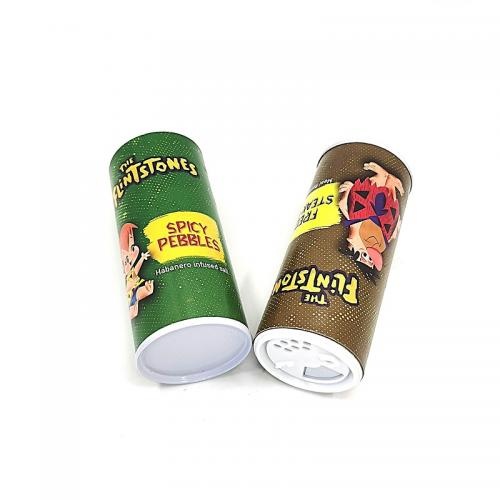
When comparing available structures, buyers can also review rolled edge paper tubes to understand the different construction options for cylindrical packaging.
The lid is not simply a finishing accessory. It affects opening convenience, dispensing, resealing, and the overall protection of the packaged product. Different food applications may require different closure designs.
Easy-peel aluminum foil lid: An easy-peel lid is suitable for packaging that needs a sealed opening before first use. Consumers can remove the foil layer to access the contents. SengKen lists aluminum foil easy-peel lids among the available material and closure options for its custom powder paper canister.
Plastic lid: A plastic outer lid can provide a convenient cover after the package has been opened. It may be combined with an inner foil seal to create a double-closure design, depending on the product configuration.
Metal lid: Metal lids are another option for cylindrical paper cans. They are commonly considered for tea and other dry food packaging where the appearance and closure style are important to the brand.
Plastic shaker lid: A shaker lid is useful for products that need controlled dispensing, including salt, pepper, seasoning, and granular food ingredients. Instead of removing the entire lid, consumers can shake out a measured amount through the dispensing openings.
SengKen's shaker lid paper tube range includes paper tubes with plastic shaker lids, plastic sifter tops, paper shaker lids, and other dispensing lid options.
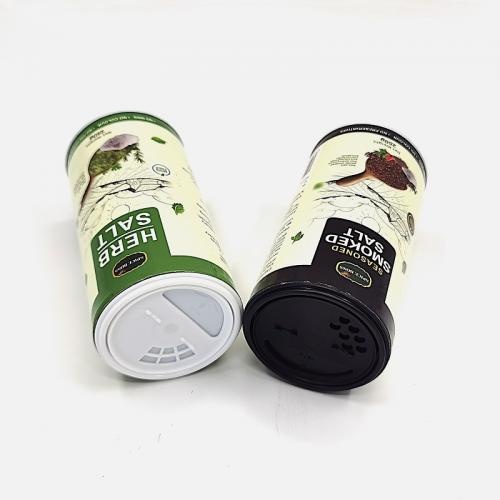
For products that need a combination of sealing and convenient dispensing, the lid design should be confirmed together with the inner liner. This helps avoid choosing a convenient closure that does not meet the product's actual storage requirements.
Powder products require particular attention to filling, dispensing, and moisture protection. Fine powders can spill easily, absorb moisture, or form lumps when exposed to unsuitable storage conditions. The packaging should therefore combine an appropriate inner material with a closure that matches the way consumers use the product.
SengKen's custom cylinder paper can for powder packaging with plastic shaker sifter is a published example of this type of packaging.
According to the product page, its listed material options include a middle kraft paper core, inner coated white paper, aluminum foil liner, PE-coated paper, and different outer paper finishes. The listed closure options include an aluminum foil easy-peel lid, easy-open end, plastic lid, and tinplate lid.
The product page also provides the following customization details:
These specifications are taken from the individual product listing and should not be treated as universal specifications for every SengKen paper canister. The final material combination, size, and closure should be confirmed according to the powder's properties and filling requirements.
In addition to packaging protection, the outer appearance helps consumers identify a product and recognize a brand on retail shelves. Custom printing and surface finishing can turn a standard cylindrical paper container into packaging that matches a product's positioning.
Custom dimensions: The diameter and height should be based on the product's net weight, filling volume, and preferred shelf presentation. Powder products with different densities may require different container dimensions even when the net weight is similar.
Brand logo and artwork: The outer paper can be printed with a logo, product name, ingredient information, usage instructions, and other required packaging details. SengKen lists CMYK and Pantone color printing for its custom powder paper canister.
Surface finishing: Matte or gloss lamination, varnishing, spot UV, hot foil stamping, and glittering are among the finishing options listed on the product page. The best finish depends on the desired visual effect, artwork, and packaging requirements.
Structural details: The lid color, opening method, inner liner, and overall canister proportions should work together. A premium snack product may prioritize shelf appearance, while a seasoning container may place greater emphasis on ease of dispensing.
For a consistent brand presentation, it is useful to prepare the logo, artwork files, product information, and preferred color references before requesting a sample.
Before requesting a quotation, buyers should prepare the information that will help the manufacturer recommend a suitable paper canister structure. Providing clear product details can also reduce repeated design changes during sampling and production.
Food-contact suitability should be confirmed for the complete packaging structure, including the inner liner, lid, seal, and any component that may contact the product. Buyers should also request relevant material documentation and conduct packaging compatibility or storage tests where necessary. A paper canister's appearance alone cannot establish its food safety or guarantee a specific shelf life.
To discuss a suitable structure, printing design, and packaging configuration, buyers can contact SengKen's packaging team with their product details and customization requirements.
Xiamen SengKen Industry & Trade Co., Ltd. provides packaging products and customization services across several categories, including cylinder paper tube packaging, flexible packaging, food packaging bags, and gift packaging.
Its published cylinder paper tube range covers rolled edge paper tubes, composite paper cans, food-grade paper canisters, sealed paper cans, and shaker lid paper tubes. The company lists customization options for size, material, printing, surface finish, and logo graphics.
For food and powder packaging projects, this range allows buyers to compare different structures and closure options according to the requirements of their products. Rather than selecting a paper canister based on appearance alone, brands can discuss the inner lining, sealing method, and dispensing design together.
Whether you are developing packaging for snacks, tea, seasoning, or powdered food, the first step is to define the product's protection and usage requirements. A well-matched paper canister can support product presentation while providing a practical packaging format for retail and distribution.
Can paper canisters be used for food packaging?
Yes. Paper canisters can be designed for dry food packaging with suitable food-contact inner materials and appropriate closures. The complete packaging structure should be confirmed for the intended food and storage conditions before use.
What foods can be packed in custom paper canisters?
Depending on the material and closure design, paper canisters can be used for tea, coffee, snacks, dried food, salt, seasonings, spices, and powdered food products. The inner lining should be selected according to the moisture, oil, and barrier requirements of the contents.
Are paper canisters suitable for powder packaging?
Yes. Powder packaging can use composite paper canisters with suitable inner liners and sealing structures. For products that require controlled dispensing, a plastic shaker sifter can also be considered.
Can custom paper cans protect food from moisture?
They can be designed with moisture-resistant structures. For example, SengKen lists aluminum foil-lined composite paper cans and moisture-proof paper canister options. Actual performance depends on the complete material structure, lid, sealing method, and storage conditions.
What is the difference between a shaker lid and an easy-peel lid?
A shaker lid is designed to dispense granular or powdered contents through openings, while an easy-peel lid provides a sealed opening that consumers remove before first use. The two closure types serve different purposes and may be selected according to the product's usage requirements.
Can the diameter and height of a paper canister be customized?
Yes. SengKen's published powder paper canister product states that diameter and height can be customized. It also lists existing diameter options from 45 mm to 189 mm for that product.
What printing and surface finishes are available?
The powder paper canister product page lists CMYK and Pantone printing, matte or gloss lamination, matte or gloss varnishing, spot UV coating, hot foil stamping, and glittering. Final options should be confirmed for the selected material and design.
What is the MOQ for SengKen's custom powder paper canister?
The product page for SengKen's custom cylinder paper can for powder packaging with plastic shaker sifter lists an MOQ of 500 pieces. MOQ may differ for other paper canister designs and should be confirmed with the company.
What information should I provide to get a quotation?
Prepare the food product type, target capacity, dimensions, inner material requirements, lid style, printing artwork, estimated quantity, and any special storage or sealing requirements. These details help the manufacturer evaluate a suitable packaging configuration.


adres : 3rd Floor,No.686,TongJi NorthRoad TongAn District,Xiamen,Fujian,China(361000)
tel : +86-13959205838
e-mail : sengkenbox@foxmail.com
Whatsapp/Wechat : +8613959205838